
It’s getting warmer again—finally! Pretty soon spring will be in full swing. With future flowers and busy bees come big questions:
When do I take off my winter tires? How do I take them off? Should I use summer or all-season tires?…
Let’s answer all those and more below!
WHY CHANGING TIRES IS IMPORTANT
Winter tires are designed to provide better traction in winter conditions, which can be icy, snowy and cold! Summer tires have trouble in these conditions due to their tread patterns and the rubber’s firmness. For added traction in the winter, consider using tire chains (and make sure to use them on all four tires!).
The tread patterns of winter tires are designed to move snow and water away from the tire as it drives, protecting its grip. Winter tires are made from a softer, more flexible rubber compound, allowing them to bend in freezing temperatures.
So, why not just keep these winter tires year-round?
This softer material of winter tires won’t last in warmer seasons as they’re less durable and will wear down quickly in the summer. Meanwhile, summer tires are built for the hot weather, giving you better control. And it’s getting close to that time!
You might be tempted to use all-season tires. While all-season tires are made to handle a broad range of conditions, including hot days and snowier ones, they won’t give you the added traction of winter and summer tires. For Manitobans, seasonal tires might be the best option, as we have a very extreme temperature range.
Cold temperatures can also decrease your tire pressure drastically if you’re not using winter tires. Some people try over-inflating non-winter tires to make up for this, but it doesn’t work. Instead, the treads wear out disproportionately.
By rotating tires, you’ll save money by:
- Prolonging the lifespan of your other tires
- Protecting traction and braking, preventing accidents
WHEN TO CHANGE TIRES
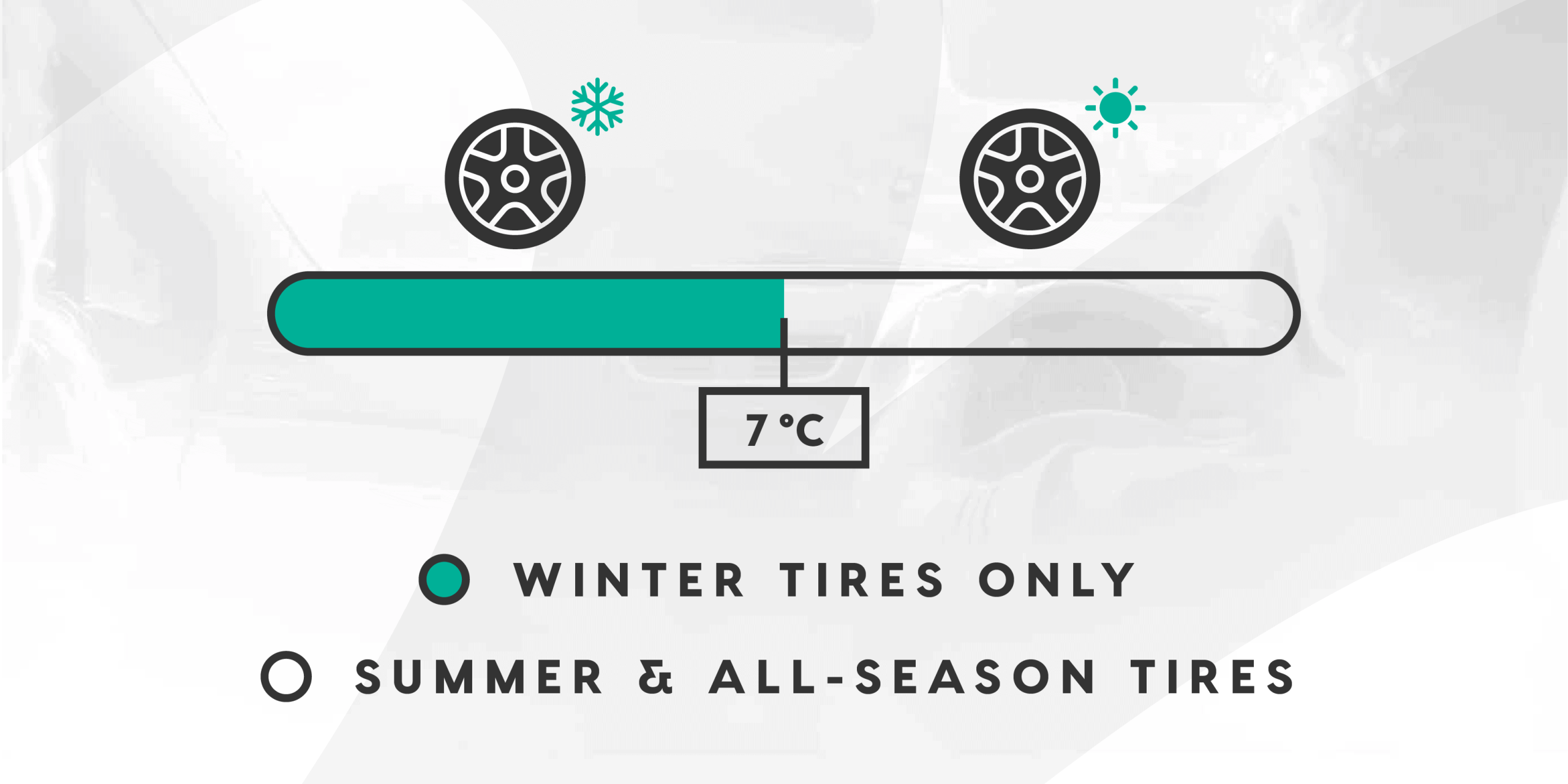
When it comes to putting on winter tires, it’s good to get ahead of the snowfall. A common rule of thumb is putting them on once temperatures dip below 7 ºC. So, once temperatures climb back up to above 7 °C, and there’s no looming threat of a huge snowfall, you can safely swap back to your summer tires.
Keep in mind that in some provinces, there are laws mandating these swaps. Quebec and Ontario, for instance, require winter tires every winter as of specific dates that can change depending on the winter. Here in Manitoba, studded tires are only allowed from October 1 to April 30 (but aren’t mandatory).
Keep in mind, you wouldn’t want to put on tires that are worn out—it’d defeat the purpose! How do you know when they’re worn out? Well, if you have a depth gauge, you can use our guide from this blog. Otherwise, take a toonie and place it between the treads. If the tire surface doesn’t reach the golden center of the toonie, they’re ready for a swap.
HOW TO CHANGE TIRES
Before changing your tires, make sure the car is in park and turned off. You don’t want the car rolling at any point, so make sure it’s on level ground! Now that you’re ready, we broke the process into 4 main parts. You’ve got this!
1. PREPARE FOR REMOVAL
Set chocks around all tires that you’re not working on. Then remove the hub caps from the wheel and loosen the lug nuts. To loosen lug nuts, use a lug wrench/tire iron. Turn them counterclockwise one by one.
To conclude this part, you’ll raise the vehicle with jacks. Only put jacks under jacking points (which are reinforced metal ribs made to hold the car). Putting jacks in the wrong spot can cause damage, so consult your owner’s manual to find your exact points.
2. REMOVE TIRES
Your tires should hover 6 inches over the ground now and are almost ready to come off. You’ve already loosened the lug nuts, so they should come with ease.
We recommend sitting the lug nuts somewhere you won’t lose them in the meantime, like in a plastic container.
Now, lift the tire and wheel together off the car. There shouldn’t be much resistance.
3. APPLY NEW TIRES
The wheel hub is where you will put the new wheel. Take a look at the metal surfaces where these two will touch (called “mating surfaces”) and ensure it’s clean. If you want, look into a wheel hub cleaning tool from your local parts store. If the areas are clean, you can lift the new wheel into place, tighten the lug nuts and attach the wheel hub!
4. WRAP UP
Congrats — you’ve changed a tire! Simply repeat steps 2 and 3 for the rest of the wheels. Once you’re ready, lower the jacks and enjoy getting traction back on your side.
NEED HELP?
Maybe you don’t have the tools, or simply would prefer someone else to change your tires—fair enough! Every Birchwood dealership offers tire change services. Our experts would love to lend you a hand! Book your tire change today.